
Eye Exam in Niagara Falls: What to Expect, When to Book, and What Your Optometrist Checks
A practical guide to eye exams in Niagara Falls, including when to book, what happens during the appointment, and how your prescription and eye health are assessed.
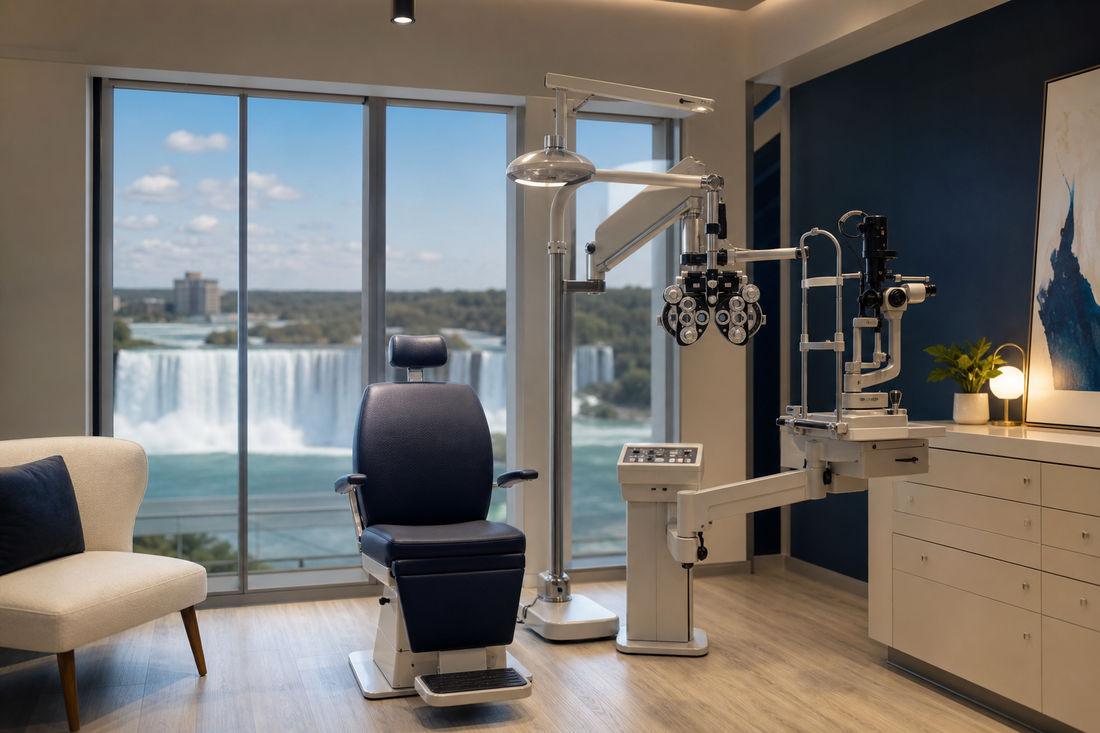
An eye exam is more than a prescription update
If you are searching for an eye exam in Niagara Falls, you may be thinking about sharper vision, new glasses, or contact lenses. Those are important reasons to book. But a comprehensive eye exam is also an opportunity to assess how your eyes are working together, review changes in your vision, and check for signs that may require monitoring or referral.
At Spectacle Clinic, the experience is designed to feel clear, comfortable, and practical. You should leave understanding your prescription, your eyewear options, and any next steps recommended by your optometrist. Whether it has been years since your last exam or you are noticing a recent change, knowing what to expect can make the appointment easier.
Need an updated prescription?
Book an eye exam in Niagara and pair your results with premium lenses and eyewear selected for your daily life.
When should you book an eye exam?
The right timing depends on your age, vision, health history, symptoms, and your optometrist’s recommendation. Some people need routine monitoring; others book because something has changed. If you are unsure whether it is time, it is reasonable to contact the clinic and ask what is appropriate for your situation.
You should consider booking an eye exam if you notice:
- Blurred vision at distance or near
- Headaches, eyestrain, or fatigue during screen work
- Difficulty driving at night or glare sensitivity
- Frequent squinting or changes in reading comfort
- New floaters, flashes, pain, redness, or sudden vision changes
- A prescription that feels outdated or uncomfortable
- A need for new glasses, sunglasses, or contact lenses
Important: sudden vision loss, significant eye pain, new flashes, a curtain-like shadow, or urgent symptoms should be addressed promptly through appropriate emergency or medical care. A blog article cannot determine urgency for an individual case.
What happens before the eye exam?
Your appointment typically begins with a conversation. Your optometrist or clinical team may ask about your current glasses or contact lenses, symptoms, screen habits, driving needs, medications, health history, family eye history, and what you want from your vision correction.
This discussion matters. A person who spends eight hours a day at a computer may need different lens guidance than someone who drives extensively, works outdoors, reads fine print, or wants a refined everyday pair of designer glasses.
What your optometrist checks during a comprehensive exam
Eye exams can vary depending on your needs, but a comprehensive appointment may include several types of testing and assessment.
Visual acuity
This is the familiar part of the exam: reading letters or symbols to measure how clearly you see at different distances. It helps establish how your current vision is performing.
Refraction and prescription measurement
Refraction determines the lens power that helps you see more clearly. Your optometrist may compare options and ask which lens looks clearer. The final prescription considers both the measurements and how your eyes respond.
Eye focusing and eye teaming
Your eyes need to focus and work together comfortably. This can be especially relevant if you experience headaches, fatigue, double vision, or discomfort during close work.
Eye pressure and eye health screening
Your optometrist may assess eye pressure and examine internal and external eye structures. Depending on the clinic’s equipment and your needs, imaging or dilation may be discussed. These steps help identify findings that may need monitoring, treatment, or referral.
Front-of-eye and dry eye concerns
Redness, irritation, fluctuating vision, and contact lens discomfort may relate to the surface of the eye. Your optometrist can assess signs and recommend appropriate next steps based on your exam.
Will your pupils be dilated?
Dilation is not required for every appointment, but it may be recommended depending on your symptoms, risk factors, health history, or what the optometrist needs to view. If dilation is performed, your vision may be blurry and light-sensitive for a period afterward, so ask the clinic what to expect and whether you should plan transportation.
Bring the right items to your appointment
To make your eye exam more useful, bring:
- Your current glasses and sunglasses
- Your current contact lens information, if applicable
- A list of medications and relevant health history
- Your vision benefits or insurance information, if you plan to use it
- Notes about symptoms, work demands, hobbies, and screen time
If you are planning to choose new eyewear afterward, it can also help to bring photos of frames you like or think about whether you want an everyday pair, a dedicated computer pair, prescription sunglasses, or a more fashion-forward designer frame.
How an eye exam connects to better glasses
A precise prescription is the starting point, but eyewear success also depends on the right frame, lens design, measurements, and coatings. After your exam, Spectacle Clinic can help translate your prescription into glasses that fit your lifestyle and style preferences.
If you wear progressives, spend long hours on screens, have a higher prescription, or are sensitive to lens thickness, the eyewear consultation is especially important. Premium eyewear is not only about the frame brand. It is about the finished result: clear vision, comfortable wear, and a frame you feel confident putting on every day.
Make your next pair feel intentional
After your eye exam, explore prescription lenses and designer frames selected for your face, prescription, and personal style.
Common reasons Niagara patients book eye exams
People book eye exams for many reasons. Some want a sharper prescription for work or school. Others are choosing new glasses after years in the same pair. Some are noticing eye fatigue from screens or changes in night driving. Parents may be booking for a child, while adults may be monitoring vision changes over time.
Whatever the reason, a good appointment should feel collaborative. You should be able to ask questions, explain what is not working, and understand the recommendations before you make eyewear decisions.
FAQ: Eye exams in Niagara Falls
How long does an eye exam take?
Timing can vary depending on the tests needed, your history, and whether additional imaging, dilation, or contact lens services are involved. Ask the clinic when booking so you can plan your visit comfortably.
Do I need an eye exam if my glasses still seem fine?
Possibly. Vision can change gradually, and an exam may assess more than prescription clarity. Your optometrist can recommend an appropriate schedule based on your age, symptoms, and health history.
Can I choose glasses after my eye exam?
Yes. Many patients choose frames after receiving an updated prescription. This is often ideal because the frame and lens recommendations can be matched to your current prescription.
What if I am nervous about the exam?
Let the team know. Most eye exam steps are straightforward, and your optometrist can explain what is happening before each test. If dilation or additional testing is recommended, you can ask why and what to expect.
Should I bring my old prescription?
If you have it, bring it, but your current glasses are often just as helpful. They allow the clinic to compare what you are wearing now with your updated exam findings.
Are eye exams only for people who wear glasses?
No. People who do not wear glasses may still book eye exams for vision concerns, eye comfort, screening, or professional guidance based on symptoms and history.
Book an eye exam in Niagara Falls
If your vision has changed, your prescription feels outdated, or you are ready for eyewear that looks and performs better, an eye exam is the right place to start. Spectacle Clinic brings together optometric care, premium lenses, and curated eyewear in one local Niagara experience.
Book your eye exam or contact Spectacle Clinic to plan your visit.
Next step
Find frames that feel as considered as they look.
Explore premium eyewear online, or book a visit and let the Spectacle Clinic team help narrow the field.