
Progressive Lenses vs. Single Vision: How to Choose the Right Lenses for Work, Driving, and Everyday Life
Not sure whether you need progressive lenses or single vision lenses? This guide explains how each option works and how to choose based on your prescription, lifestyle, and visual demands.
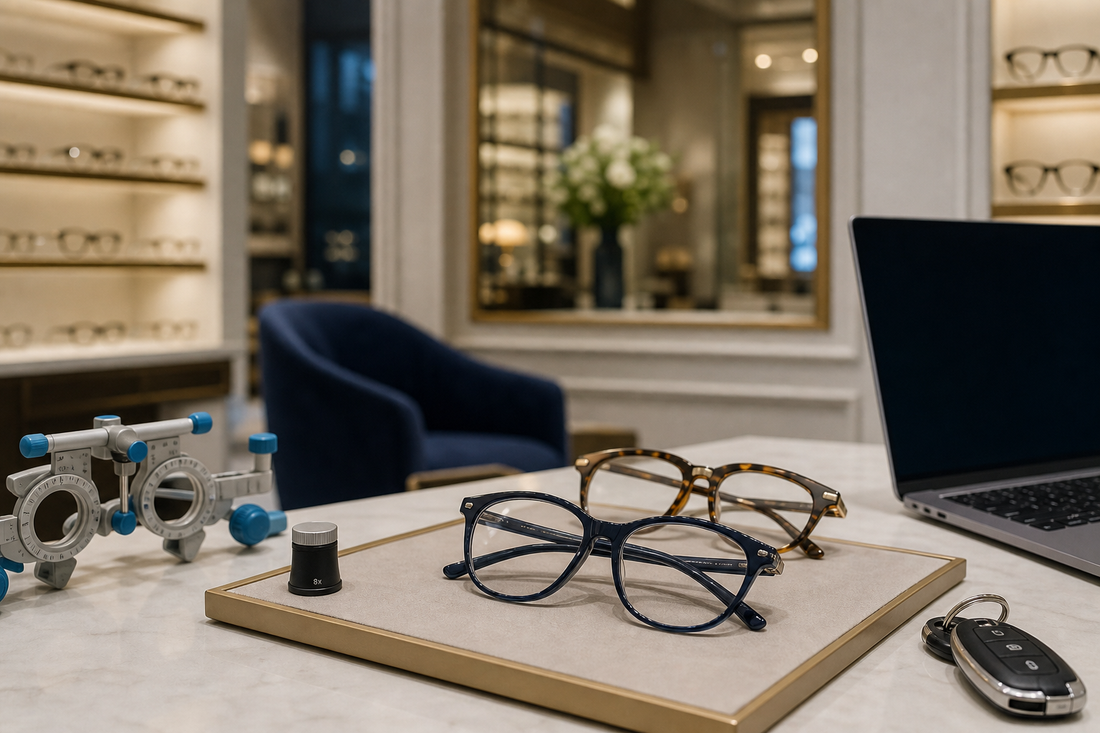
The simple difference between progressive and single vision lenses
Single vision lenses correct one viewing distance. They may be designed for distance, reading, computer work, or another specific visual task. Progressive lenses correct multiple distances in one lens—typically distance at the top, intermediate vision through the middle, and near vision toward the bottom—without the visible line found in traditional bifocals.
Choosing between progressive lenses and single vision lenses is not only about age or prescription. It is about how you use your eyes from morning to night: driving in Niagara traffic, checking your phone, working at a laptop, reading menus, watching TV, shopping, travelling, and enjoying outdoor time.
Need help choosing the right lenses?
Book an eye exam or bring your current prescription to Spectacle Clinic. Our optical team can recommend lens options based on your work, driving, screen time, and style preferences.
What are single vision lenses?
Single vision lenses have one prescription power across the lens. They are commonly prescribed for:
- Distance vision: driving, watching TV, presentations, and general everyday wear.
- Near vision: reading, close craft work, or detailed tasks.
- Computer vision: a dedicated working distance for monitors and office setups.
Single vision lenses are straightforward, comfortable for many wearers, and often easier to adapt to than multifocal lenses. They can be an excellent choice if you only need correction at one distance or if you prefer task-specific eyewear.
What are progressive lenses?
Progressive lenses are multifocal lenses with a gradual change in power from the top to the bottom of the lens. Instead of switching between separate distance and reading glasses, you can use one pair for many daily tasks.
A well-designed progressive lens can feel natural for people who need help seeing both far away and up close. However, progressives require precise measurements, an appropriate frame, and an adjustment period. Premium lens design and careful fitting make a noticeable difference.
Who usually needs progressive lenses?
Progressive lenses are commonly recommended for people experiencing presbyopia, the natural age-related change that makes near focusing more difficult. Many people first notice it when they hold menus farther away, remove their distance glasses to read, increase font sizes, or feel eye fatigue after close work.
You may be a candidate for progressives if you need different correction for distance and near tasks, want one polished pair for everyday use, or dislike switching between multiple pairs of glasses throughout the day.
When single vision lenses may be the better choice
Single vision lenses may be ideal if your visual needs are focused and consistent. For example:
- You only need distance correction for driving and daily wear.
- You only need reading glasses for books, menus, or close work.
- You work long hours at a computer and want dedicated office lenses.
- You prefer the widest possible clear field for one distance.
- You are sensitive to adaptation and want the simplest lens experience.
Some clients choose single vision glasses even when they own progressives. A dedicated computer pair, reading pair, or prescription sunglasses can make specific tasks more comfortable.
Progressive lenses for work and screens
Standard everyday progressives can be useful at work, but they are not always the best solution for eight hours at a desk. The intermediate zone in an everyday progressive is designed to balance many distances, not necessarily to maximize monitor comfort all day.
If you spend much of your day on screens, ask about occupational or office lens designs. These lenses may prioritize computer and near distances, creating a wider functional area for desk work. They are not usually intended for driving, but they can be a premium solution for professionals, designers, accountants, executives, and anyone who spends long stretches between a laptop, monitor, documents, and phone.
Progressive lenses for driving
For driving, progressive lenses can provide clear distance vision through the upper portion of the lens while allowing you to view the dashboard, navigation, and controls through intermediate or near zones. This can be convenient, especially if you would otherwise switch glasses to check a phone or read small dashboard details while parked.
Frame fit matters for driving. If a frame sits too low, slips, or has an unsuitable lens height, the distance zone may not align comfortably. At Spectacle Clinic, measurements and frame adjustments are part of creating a lens that works in real life—not just on paper.
Single vision lenses for driving
If your main concern is crisp distance clarity, single vision distance lenses can be excellent for driving. They generally provide a wide, stable field of view at distance. Some people also choose prescription sunglasses in single vision distance for daytime driving, especially with polarization or driving-friendly tints when appropriate.
If you need to read small text up close, you may still need a separate pair for near tasks. Your optician can help you decide whether the simplicity of single vision outweighs the convenience of progressives.
Frame choice: why it matters more with progressives
Every prescription lens needs a well-fitting frame, but progressives are more sensitive to frame selection. The lens must have enough vertical height for distance, intermediate, and near zones. The frame should sit consistently on your nose and ears, with the right tilt, wrap, and position relative to your pupils.
That does not mean progressive wearers have to sacrifice style. Many luxury frames work beautifully with progressive lenses. The key is choosing a frame that is both aesthetically right and optically appropriate. A skilled optical stylist can help you find that balance.
Adaptation: what to expect with progressive lenses
Most new progressive wearers need a short adaptation period. You may learn to point your nose more directly at what you want to see, use the lower portion for reading, and avoid looking through the edges for detailed tasks. This is normal.
Premium progressive designs can reduce distortion and improve comfort, but they still need accurate measurements and proper fitting. If something feels off after a reasonable adjustment period, return to the clinic. Small frame adjustments can make a significant difference.
Lens upgrades that can improve either option
Whether you choose progressive or single vision lenses, premium enhancements can improve comfort and appearance:
- Anti-reflective coating: reduces reflections and improves lens clarity, especially for night driving and screen use.
- Blue-violet light filtering options: may be considered for screen-heavy lifestyles, depending on your preferences and lens recommendation.
- High-index materials: can reduce thickness for stronger prescriptions.
- Photochromic lenses: darken outdoors and remain clearer indoors, convenient for people moving between environments.
- Polarized sun lenses: useful for prescription sunglasses and glare-heavy conditions.
How to choose: a practical Niagara lifestyle checklist
Before ordering lenses, ask yourself:
- Do I need clear vision at one distance or several?
- How many hours per day do I spend on screens?
- Do I drive often, especially at night or on highways?
- Do I read printed documents, menus, labels, or books frequently?
- Do I prefer one pair for everything or dedicated pairs for specific tasks?
- Am I choosing a frame that supports the lens design I want?
The best answer may not be one pair. Many clients have an everyday progressive, a dedicated office lens, and prescription sunglasses. Others do beautifully with a single vision distance pair and separate readers. The right solution should fit your actual routine.
Get lenses tailored to your life, not just your prescription
Visit Spectacle Clinic in Niagara for premium frame styling, precise measurements, and lens recommendations built around how you work, drive, read, and live.
FAQ: Progressive lenses vs. single vision
Are progressive lenses better than single vision lenses?
Not always. Progressive lenses are better if you need multiple viewing distances in one pair. Single vision lenses may be better if you need one clear distance or want task-specific glasses.
Are progressive lenses hard to get used to?
Some people adapt quickly, while others need more time. Proper measurements, frame fit, and lens design can improve comfort significantly.
Can I use progressive lenses for computer work?
Yes, but if you spend long hours at a desk, dedicated office or occupational lenses may offer a wider, more comfortable screen zone than standard everyday progressives.
Do progressive lenses have visible lines?
No. Progressive lenses provide multiple powers without the visible line found in traditional bifocals.
Can single vision lenses be used for reading only?
Yes. Single vision lenses can be made for near tasks such as reading, detailed work, or hobbies.
Do I need a special frame for progressive lenses?
You need a frame with suitable lens height, fit, and stability. Many designer frames work well, but the frame should be assessed before ordering progressive lenses.
Next step
Find frames that feel as considered as they look.
Explore premium eyewear online, or book a visit and let the Spectacle Clinic team help narrow the field.